

Acne scarring is a common and difficult issue to resolve. To achieve optimal results, it requires a combination of invasive aesthetic procedures and at-home topical skincare products.
1. Causes of atrophic scars
Atrophic scars (pitted scars) are scars that are depressed below the normal skin surface, formed because the body does not produce enough collagen while the wound is healing.
Atrophic scars are the result of deep inflammation. Some causes of deep inflammation include acne, chickenpox, accidents, etc. Among them, acne is the leading cause of atrophic scars. The severity and morphology of the scars depend on the level of inflammation.

2. Classification of atrophic scars
Atrophic scars are usually classified into 3 types:
- Ice pick scars: the most common type, these are quite deep, appearing as if a sharp object has pierced the skin, with a narrow diameter of < 2mm and a depth of about 0.5mm. They frequently appear on the cheeks and forehead.
- Boxcar scars: these have relatively shallow and flat bases, a diameter of about 2-4mm, and a depth of about 1.5mm, appearing on the cheeks and temples.
- Rolling scars: formed by inflammatory acne, where cysts penetrate deep into the dermis, causing extensive tissue destruction and creating fibrous, tethered scar tissue with a deep base and a mouth wider than 4-5mm. They are commonly found on the cheeks and lower jaw area.

Classification of acne scar severity according to the Goodman and Baron scale:
- Macular scars: the mildest grade, flat scars that are not lower than the skin surface. These scars can be erythematous, hyperpigmented, or hypopigmented marks.
- Mild scars: usually observable from a distance of less than 50cm and easily covered with makeup.
- Moderate scars: clearly visible from a distance of 50cm or more and not easily covered with makeup.
- Severe scars: clearly visible from a distance of 50cm or more and not easily covered with makeup. When the skin is stretched, the scar base does not flatten out with the skin surface as it does with moderate scars.
3. Scar treatment methods
The general principle of scar treatment methods is to create micro-injuries so that the healing and collagen-boosting process is activated. Consequently, the scarred skin area is regenerated and replaced with healthy, fresh new skin. Popular scar treatment methods today include:
3.1. Fractional CO2 Laser
This is the most widely applied method in Vietnam. Fractional CO2 laser uses energy at a wavelength of 10,600 nm to create micro-injuries on the skin, stimulating the formation of new collagen. However, because this is an invasive aesthetic procedure, it causes unwanted post-treatment side effects such as erythema and hyperpigmentation. Therefore, fractional CO2 laser must be performed by a skilled doctor and requires a strict post-treatment care regimen.
3.2. Chemical Peel
Chemical peeling is a method of using an acid solution applied to the skin to remove the outermost damaged skin layer and stimulate the repair process, forming a healthy new layer of skin.
The active ingredients and concentration of the peeling solution are selected depending on the type and severity of the scar. Common peeling chemicals include: glycolic acid (50-70%), Jessner solution, and Trichloroacetic Acid (TCA) from 25%.
Another technique widely used in treating ice pick scars is TCA Cross. CROSS stands for "chemical reconstruction of skin scars." The TCA Cross method uses high-concentration TCA (50-100%) applied locally to the scars using wooden applicators. TCA is applied for a few seconds until the scar displays a white frosting. This technique can avoid leaving scars and reduce the risk of hypopigmentation because it does not damage surrounding skin areas.
3.3. Microneedling
Microneedling uses small needles to create controlled injuries on the skin; these injuries stimulate the healing signal pathways and increase collagen production, thereby regenerating and filling in the scarred area. This method also carries similar risks of side effects as fractional CO2 laser, although the downtime is shorter.
4. Topical active ingredients
Clinical treatment methods only work to create micro-injuries to stimulate the skin's healing process; therefore, at-home care steps after treatment are very important. The active ingredients typically applied topically will have the task of strongly stimulating collagen production and supporting the smooth progression of the healing process.
Some collagen-boosting active ingredients include Retinoids, Vitamin C, EGF (Growth Factor), and Copper Peptide GHK-Cu (Copper Tripeptide-1). However, after invasive procedures, the skin is quite heavily damaged and cannot tolerate highly irritating active ingredients like Retinoids or Vitamin C. Therefore, EGF and GHK-Cu are safe and effective choices that promote collagen production and complement invasive procedures.
Furthermore, after performing aesthetic procedures, conditions are favorable for larger-sized active ingredients like GHK-Cu and EGF to easily cross the stratum corneum barrier and penetrate better.
4.1. Copper Tripeptide-1 (GHK-Cu)
GHK-Cu is a complex of Tripeptide-1 (Glycyl, Histidyl, and Lysine) linked to a copper element. Copper is an essential trace element for life that provides fatty acids and essential vitamins for the skin. Tripeptide-1 (GHK) is a part of Type I Collagen, capable of activating collagen synthesis signaling pathways. Supplementing peptides like GHK "tricks" the skin into believing that collagen has been broken down and it is time to create new collagen.
The combination of these two components creates the Copper Tripeptide-1 complex, which helps repair and heal wounds, resist inflammation, and provide antioxidant benefits, while stimulating the production of important skin components like Collagen, Elastin, and Glycosaminoglycans (GAGs), thereby improving elasticity and firmness as well as reducing wrinkles/fine lines on the skin.
GHK-Cu provides 3 effects for skin after acne scar treatment:
- Skin repair and regeneration: GHK-Cu heals wounds effectively thanks to its ability to stimulate the synthesis of skin structural components like collagen, elastin, and glycosaminoglycans (GAGs), regulating the activity of metalloproteinases (collagen-degrading enzymes) to prevent the accumulation of damaged collagen. GHK-Cu has also been proven to have beneficial effects on fibroblasts - key progenitor cells in the skin regeneration process. Fibroblasts not only synthesize structural factors of the skin matrix but also produce a variety of growth factors necessary for skin repair.
- Scar tissue remodeling: GHK-Cu has a special feature: it breaks down damaged or oversized collagen fibers (such as collagen IV) that cause hypertrophic scars and subsequently stimulates the production of healthy collagen. Therefore, GHK-Cu is commonly used after scar treatment procedures.
* In-vitro studies have found that GHK-Cu possesses properties superior to Vitamin C and Retinoids.

- Anti-inflammatory: GHK-Cu inhibits pro-inflammatory cytokines such as TGF-β and TNF-α, thus having a strong anti-inflammatory effect; it can be used as a topical agent in the treatment of inflammatory skin conditions as an alternative to corticosteroids. GHK inactivates harmful free radical byproducts of lipid peroxidation and stimulates the body's internal antioxidant system, such as superoxide dismutase, protecting cells from ultraviolet (UV) radiation.
Suggested product:
oh!oh! Flawless Abyss Serum - an atrophic scar-reducing essence highly rated and popular in the Korean market, a product specialized for atrophic scars, focused on recovery, regeneration, and providing essential nutrients to nourish the skin. In particular, this is an unmissable product if you have had or are undergoing aesthetic procedures such as laser, microneedling, or chemical peeling.
Ingredient list highlighted with leading skin-repairing and regenerating active ingredients:
- 1.2% GHK-Cu: repairs damaged cells while stimulating the production of important skin components like collagen, elastin, and glycosaminoglycan, thereby filling in scars, as well as improving skin elasticity and firmness.
- 9.9 ppm EGF: stimulates the skin to accelerate cell regeneration and restructure the skin, thereby nourishing healthy skin.
- Centellosides (Centella Asiatica extract) (asiaticoside, madecassoside, asiatic & madecassic acid): antioxidant, anti-inflammatory, and stimulates GAGs production.
- Pro Anti-Irritant Complex (Dipotassium glycyrrhizinate, Anthemis Nobilis Flower Extract, Allantoin): anti-inflammatory properties, soothes skin, accelerates the recovery of damaged and sensitive skin.
- Fucus Vesiculosus Extract: stands out for its antioxidant properties, protecting the skin from harmful environmental factors and preventing signs of premature aging.
> > > See product details HERE


4.2. EGF (Epidermal Growth Factor)
Human epidermal growth factor (hEGF), a polypeptide hormone (52 amino acids) in the human body, is secreted by platelets, macrophages, fibroblasts, and bone marrow-derived mesenchymal stem cells. EGF plays a crucial role in stimulating epithelial and fibroblast differentiation, enhancing collagen synthesis, and supporting the wound-healing process.
EGF stimulates cell proliferation, differentiation, and survival mainly through the epidermal growth factor receptor (EGFR). When EGF binds to its receptor, it initiates a cascade of molecular reactions that results in cell division and concludes when DNA in the nucleus expresses a protein and creates certain changes in the cell. This provides the following effects:
- Regulates cell proliferation, function, and differentiation through receptor-signaling mechanisms.
- Directly affects the biosynthesis of collagen, elastin, and the extracellular matrix (ECM).
- EGF entering the dermis of aging skin can promote fibroblast proliferation and restore fibroblast synthetic capacity.
-> Consequently, it helps accelerate recovery, increase the rate of regeneration, slow down the aging process, and inhibit the formation of wrinkles.
A study conducted on 21 patients showed that EGF provided superior efficacy at three months post-treatment compared to a placebo. The wound-healing response did not differ between groups. Surprisingly, the melanin index in the group using EGF decreased significantly after three months of treatment compared to the placebo. There were no reports of cases where EGF caused irritation.
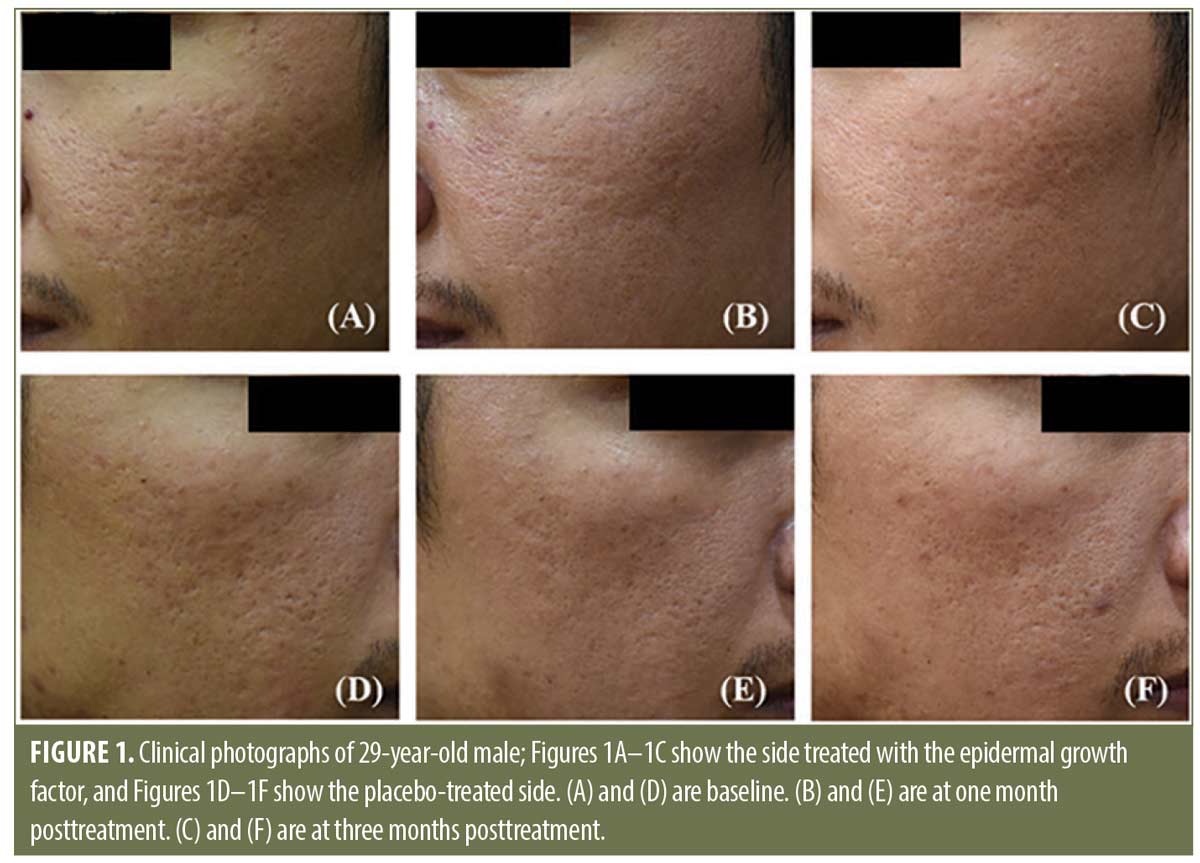
In a study on the use of topical EGF after scar treatment via microneedling, Kalil, Frainer, et al. (2015) selected 10 patients aged 20-40 of both genders who underwent three microneedling sessions with 2mm needles, using a mask containing growth factors (EGF, IGF, TGF-beta3). The results showed an overall improvement in skin texture, especially in patients who used EGF after two microneedling treatments.
>>> Suggested product
oh!oh! currently owns 2 products containing Epidermal Growth Factor (EGF) at a concentration of 9.9ppm (the highest on the market), combined with other advanced active ingredients to optimize effectiveness on the skin:
oh!oh! Oatmere Serum - a stem cell serum for regeneration for skin after invasive procedures, with a combination of anti-inflammatory ingredients that effectively promote healing:
- 9.9 ppm EGF (sh-Oligopeptide-1): includes 53 amino acids that stimulate epidermal cell proliferation and promote additional Elastin production, restructure the skin, thereby accelerating recovery and healing and healing scars.
- 4.5% Avena Sativa (Oat) Kernel Extract: soothes, reduces inflammation, and heals damage on the skin. Oats contain high levels of β-glucan which retains moisture for the skin and limits transepidermal water loss (TEWL). The Avenanthramide polyphenols in oats have effective antioxidant and anti-inflammatory properties.
- Centellosides (Centella Asiatica extract) (asiaticoside, madecassoside, asiatic, and madecassic acid): antioxidant and anti-inflammatory in wound healing, stimulates the skin to produce GAGs and Collagen.
- Pro Anti-Irritant Complex (Dipotassium glycyrrhizinate, Anthemis Nobilis Flower Extract, Allantoin): anti-inflammatory properties, soothes skin, increases the skin's moisture retention, accelerates the recovery of damaged and sensitive skin.
- Fucus Vesiculosus Extract: softens, restores, and moisturizes the skin and prevents signs of premature aging.
> > > See product details HERE

oh!oh! Flawless Abyss Serum - an atrophic scar-reducing essence highly rated and popular in the Korean market, a product specialized for atrophic scars, focused on recovery, regeneration, and providing essential nutrients to nourish the skin. In particular, this is an unmissable product if you have had or are undergoing aesthetic procedures such as laser, microneedling, or chemical peeling. Ingredient list highlighted with leading skin-repairing and regenerating active ingredients:
- 1.2% GHK-Cu: repairs damaged cells while stimulating the production of important skin components like collagen, elastin, and glycosaminoglycan, thereby filling in scars, as well as improving skin elasticity and firmness.
- 9.9 ppm EGF: stimulates the skin to accelerate cell regeneration and restructure the skin, thereby nourishing healthy skin.
- Centellosides (Centella Asiatica extract) (asiaticoside, madecassoside, asiatic & madecassic acid): antioxidant, anti-inflammatory, and stimulates GAGs production.
- Pro Anti-Irritant Complex (Dipotassium glycyrrhizinate, Anthemis Nobilis Flower Extract, Allantoin): anti-inflammatory properties, soothes skin, accelerates the recovery of damaged and sensitive skin.
- Fucus Vesiculosus Extract: stands out for its antioxidant properties, protecting the skin from harmful environmental factors and preventing signs of premature aging.
> > > See product details HERE

5. Suggested skincare routine
- Within 48 hours post-treatment: during this stage, the skin is seriously damaged and needs sufficient moisture for the healing process. The skin should be cleaned gently with physiological saline, using topical antibiotics as prescribed by the treating doctor. You can additionally use moisturizing active ingredients like hyaluronic acid to provide moisture to help wounds heal faster.
- During the first week after the procedure: continue using antibiotics as prescribed by your doctor, apply products that support collagen production and promote wound healing such as EGF and Copper Tripeptide-1, 2-3 times per day for faster skin recovery. Limit exposure to sunlight; when going outside, cover up carefully and apply a broad-spectrum sunscreen with SPF 50 or higher. If the skin is still too damaged to apply sunscreen, you can use oral sunscreen supplements instead while ensuring you stay well-protected.
Suggested skincare routine:
* MORNING:
- Martiderm Essentials Micellar Cleansing Gel is the ideal formula for the morning cleansing step, gently removing excess oil and dirt without stripping necessary moisture, leaving the skin clean, refreshed, and not tight. Additionally, the product contains Edelweiss extract to effectively moisturize and protect the epidermal layer.
>>> See product details HERE
- oh!oh! EOX Defending Tonique not only helps remove impurities remaining after cleansing but also supports pH balance, provides hydration, and prepares the skin for subsequent skincare steps.
>>> See product details HERE
- oh!oh! Flawless Abyss Serum reduces pitted scars, repairs damaged skin, and promotes collagen production to fill in scar tissue.
>>> See product details HERE
- oh!oh! Cellular Corrective Cream is a specialized moisturizer for oily skin that helps control excess oil, soothe red inflamed acne spots, and strengthen the skin's natural protective barrier, leading to long-term healthy skin.
>>> See product details HERE
- Bella Aurora Dark Spot Sunscreen Protects & Unify SPF50+ provides maximum protection, preventing the harmful effects of 5 types of radiation (UVA / UVB / HEV / IR / WIFI). Turmeric extract helps protect the skin optimally from free radical damage while preventing sun-induced skin aging. The oil-free formula with a super light texture absorbs quickly into the skin for an invisible, dry, and smooth finish.
>>>> See product details HERE
* EVENING:
- oh!oh! Xylica Micellar Cleansing Water gently removes makeup and dirt with a formula containing Centella Asiatica extract and AQUAXYL™ complex, which perfectly balances pH while ensuring clean, smooth, and refreshed skin without the need to rinse with water.
>>> See product details HERE
- Martiderm Essentials Micellar Cleansing Gel is the ideal formula for the cleansing step, gently removing excess oil and dirt without stripping necessary moisture, leaving the skin clean, refreshed, and not tight. Additionally, the product contains Edelweiss extract to effectively moisturize and protect the epidermal layer.
>>> See product details HERE
- Similarly, use the oh!oh! Flawless Abyss Serum for pitted scars.
- oh!oh! Oatmere Serum, a stem cell and skin-regenerating serum with 4.5% oat extract, soothes the skin and prevents irritation when using treatments (BHA, Retinoid). Its high concentration of EGF (9.9ppm) effectively promotes cell proliferation and combats signs of aging.
>>> See product details HERE
